

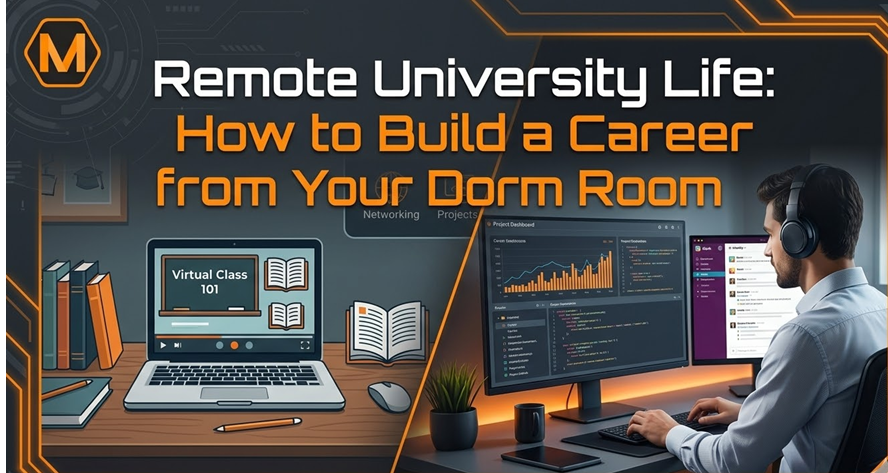
The traditional image of university life—rushing across a rainy campus to catch a lecture—is fading. In 2026, the “dorm room office” has become the new standard. Remote university life isn’t just about attending Zoom seminars in your pajamas; it’s about a massive shift in how young professionals are born. For the first time in history, students have the digital tools to build a global career while still earning their degrees. This new era offers a unique advantage: the ability to merge academic theory with real-world practice without ever leaving your desk.
However, the transition to a remote environment comes with a heavy workload that can often feel overwhelming. Managing independent research, attending virtual labs, and keeping up with endless deadlines requires a level of discipline that many find difficult to maintain alone. Many students realize that to stay competitive in the 2026 job market, they need to delegate the more tedious aspects of their studies. This is where professional Assignment Help uk from experts like myassignmenthelp becomes a vital asset, allowing students to focus on high-level career networking while ensuring their grades remain top-tier. By offloading the stress of complex formatting and initial drafting, you free up the mental energy needed to launch a startup or land a remote internship.
Designing Your “Office” for Peak Productivity
When your bedroom is also your lecture hall and your boardroom, the physical environment matters more than you think. You don’t need a massive budget, but you do need a “productivity zone.”
- Ergonomics Over Comfort: While working from bed is tempting, it’s a recipe for burnout. A dedicated desk and a chair with proper back support are non-negotiable.
- The Second Screen Advantage: Studies show that a dual-monitor setup can increase productivity by up to 40%. It allows you to keep your research open on one side and your writing software on the other.
- Lighting and Professionalism: If you are building a career, you will be on video calls. Position your desk facing a window for natural light. It makes you look more professional to potential employers or clients.
Digital minimalism is also a part of your environment. Clear your desktop of unnecessary icons and use “Focus Modes” on your devices to silence notifications from social media. In the remote world, your ability to focus is your most valuable currency.
Mastering the 2026 Job Market Skills
The 2026 economy doesn’t just care about what you know; it cares about what you can do with AI and digital tools. Building a career from your dorm means becoming an “Authentic Expert.” Employers are looking for students who have moved beyond basic literacy into “AI Fluency.”
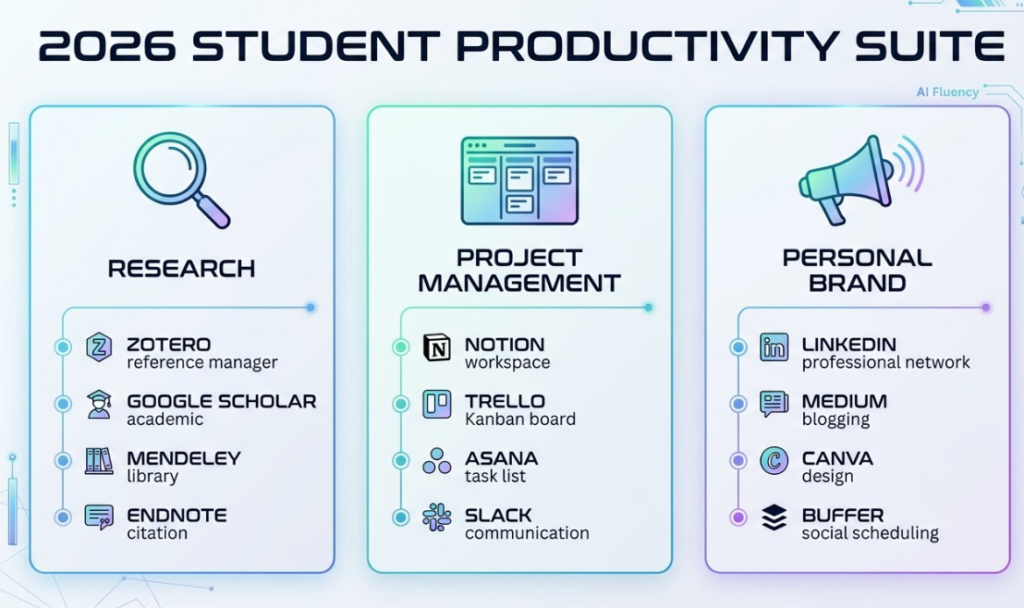
This involves understanding how to prompt generative models for research while maintaining a human touch in the final output. It also involves “Digital Communication Mastery.” Since you won’t be meeting colleagues at a water cooler, you must learn to be concise, professional, and persuasive through email, Slack, and video. If you can demonstrate that you can manage a project independently from a remote location, you’ve already proven you are ready for the modern workforce.
The pressure to perform at this high level can lead to a backlog of university requirements that seem to pile up overnight. When the stress of a looming deadline starts to interfere with your career-building activities, it is common to look for a way to say, “Do My Coursework” so you can keep your momentum in the professional world.
The Essential Skill Matrix for Remote Students
To succeed, you need to balance your time between three core pillars: Academics, Career Development, and Personal Wellbeing.
| Category | Skills to Master | Tools to Use | Impact on Career |
| Academic | Critical Analysis, Research | Zotero, Google Scholar | Establishes domain expertise |
| Professional | Networking, Project Management | LinkedIn, Trello, Notion | Leads to internships & job offers |
| Technical | AI Prompting, Data Viz | ChatGPT-5, Canva, Python | Increases market value |
| Personal | Time Boxing, Boundary Setting | RescueTime, Forest App | Prevents burnout and fatigue |
Leveraging Your Student Status for Networking
One of the best-kept secrets of remote university life is that the “Student” label is a golden ticket. People are generally willing to help students more than they are willing to help job seekers.
- The Cold Outreach: Reach out to industry leaders on LinkedIn. Don’t ask for a job; ask for a 15-minute “information interview.” Mention that you are studying remotely and admire their work.
- Virtual Societies: Join international student organizations. These groups often have job boards and networking events that are far more effective than local campus clubs.
- Build a Public Portfolio: Don’t wait for graduation to show your work. Start a blog, a GitHub repository, or a specialized social media page. Document what you are learning in real-time. This creates a “searchable” version of your resume that works for you while you sleep.
The Balancing Act: Academics vs. Ambition
The biggest challenge of the dorm-room career is the “always-on” trap. When you work, study, and live in the same ten-square-foot space, the lines blur. You might find yourself answering work emails at midnight or trying to write an essay during a professional meeting.
To avoid burnout, you must implement “Time Blocking.” This isn’t just a to-do list; it’s a schedule that treats your study time as a sacred appointment. If you have a block of time dedicated to your dissertation, don’t let a freelance project bleed into it. Conversely, when you are working on your career, don’t let the guilt of unfinished schoolwork distract you.
Successful remote students are those who treat their education like a job and their career like an education. They are constantly learning and constantly delivering. It is a grueling pace, but the reward is entering the “real world” with four years of experience already under your belt.
Financial Literacy and the Student Entrepreneur
Building a career usually requires some form of investment, even if it’s just a subscription to a professional tool or a premium LinkedIn account. Living in a dorm provides a unique safety net with lower overhead costs. This is the perfect time to experiment with “Micro-Businesses.”
Whether it is consulting in a niche you’re passionate about or starting a drop-shipping store, the lessons you learn in managing your own finances will serve you better than any textbook. In 2026, being “economically savvy” means understanding how to use your student status to access discounts, grants, and software that would otherwise cost thousands.
Overcoming the Isolation of the Virtual Campus
One downside to the remote lifestyle is the lack of physical social interaction. Human beings are social creatures, and “Zoom fatigue” is a real phenomenon. To build a long-term career, you need a support network. This includes mentors, peers, and even professional services that can help carry the load.
Don’t isolate yourself. Schedule “co-working” sessions over video calls with classmates where you all work in silence. Join Discord servers related to your industry. By creating a community, you find people who can refer you to jobs or help you understand a difficult academic concept.
Building Your Personal Brand While You Study
In the digital age, your reputation precedes you. Every assignment you write, every post you make on LinkedIn, and every project you complete contributes to your personal brand. Remote students have a unique opportunity to curate this brand carefully.
- Consistency is Key: Post updates about your learning journey once a week.
- Show the Process: Don’t just show the final result; show the research, the struggle, and the revision. This proves your work ethic.
- Target the Right Audience: If you want to work in finance, write your university papers on fintech trends and share your findings with finance professionals.
The 2026 “Hybrid” Reality
Even if your university is 100% remote, the world is becoming hybrid. This means you should look for local opportunities to supplement your online life. Visit local co-working spaces once a week to network with local professionals. Attend industry meetups in your city. The goal is to use your dorm as a base of operations, not a prison.
Conclusion: Your Dorm Room is Your Launchpad
The wall between “being a student” and “being a professional” has been knocked down. Remote university life is no longer a second-best option; for the ambitious, it is the best option. It allows you to tailor your environment to your own needs, skip the commute, and start building your future today.
By mastering your environment, leveraging expert support when you need it, and staying focused on the skills the future actually demands, you can turn your dorm room into the headquarters of your very own empire. The world is no longer waiting for you to graduate—it’s waiting for you to log in.
Frequently Asked Questions
How can I maintain a work-life balance while living and studying in the same room?
Establish a “physical boundary” by designating a specific desk or corner solely for tasks. Once your scheduled hours are over, physically step away from that space to help your brain transition from a productive mindset to a relaxation mode.
What is the most effective way to network as a remote student?
Focus on digital platforms like LinkedIn to request brief informational interviews with industry professionals. Joining virtual communities and attending webinars allows you to build a global network without the need for a physical campus presence.
Can I really build a professional portfolio while still in university?
Yes. By documenting your learning journey through blogs, open-source projects, or specialized social media accounts, you create a public record of your expertise. This “proof of work” often carries more weight with modern employers than a standard resume.
How do I handle the mental fatigue of constant screen time?
Implement the “90-minute focus block” technique followed by a complete digital break. Stepping away from all electronic devices for at least fifteen minutes between sessions helps reduce ocular strain and prevents cognitive burnout.
About The Author
Alexander Andeerson is a dedicated academic researcher and contributing writer at MyAssignmentHelp. With a passion for modern student success and digital innovation, Alexander specializes in exploring the intersection of remote learning and professional development. Through insightful commentary, Alexander empowers students to navigate the complexities of higher education while building future-ready careers.
