



Introduction
Physical fitness is often viewed as the result of genetics discuss the role of behavior in physical fitness levels, access to facilities, or the availability of time and resources. While these factors certainly play an important role, they do not fully explain why some individuals maintain high physical fitness levels while others struggle despite having similar circumstances. A deeper and more influential factor lies beneath the surface: human behavior. The choices people make daily—how they eat, move, rest, and manage stress—directly shape their physical fitness levels over time.
Behavior is not limited to deliberate exercise routines or structured workouts discuss the role of behavior in physical fitness levels. It also includes habits, attitudes, motivations, emotional responses, and lifestyle decisions that influence physical activity and health outcomes. Understanding the role of behavior in physical fitness levels is essential for individuals, health professionals, educators, and policymakers who aim to improve overall health and well-being.
This article explores how behavioral patterns influence physical fitness discuss the role of behavior in physical fitness levels, examining psychological, social, and environmental aspects of behavior. It also discusses how positive behavioral changes can enhance fitness levels and how negative behaviors can hinder physical development and performance.
Understanding Physical Fitness
Physical fitness refers to the body’s ability to perform daily tasks efficiently discuss the role of behavior in physical fitness levels, with sufficient energy, and without excessive fatigue. It is a multidimensional concept that includes several key components:
- Cardiorespiratory endurance
- Muscular strength
- Muscular endurance
- Flexibility
- Body composition
Each of these components is influenced by consistent behaviors over time rather than short-term efforts discuss the role of behavior in physical fitness levels. For example, a single workout does not significantly improve endurance, but regular physical activity does. Similarly, balanced eating habits influence body composition more than occasional dieting.
Behavior as a Foundation of Physical Fitness
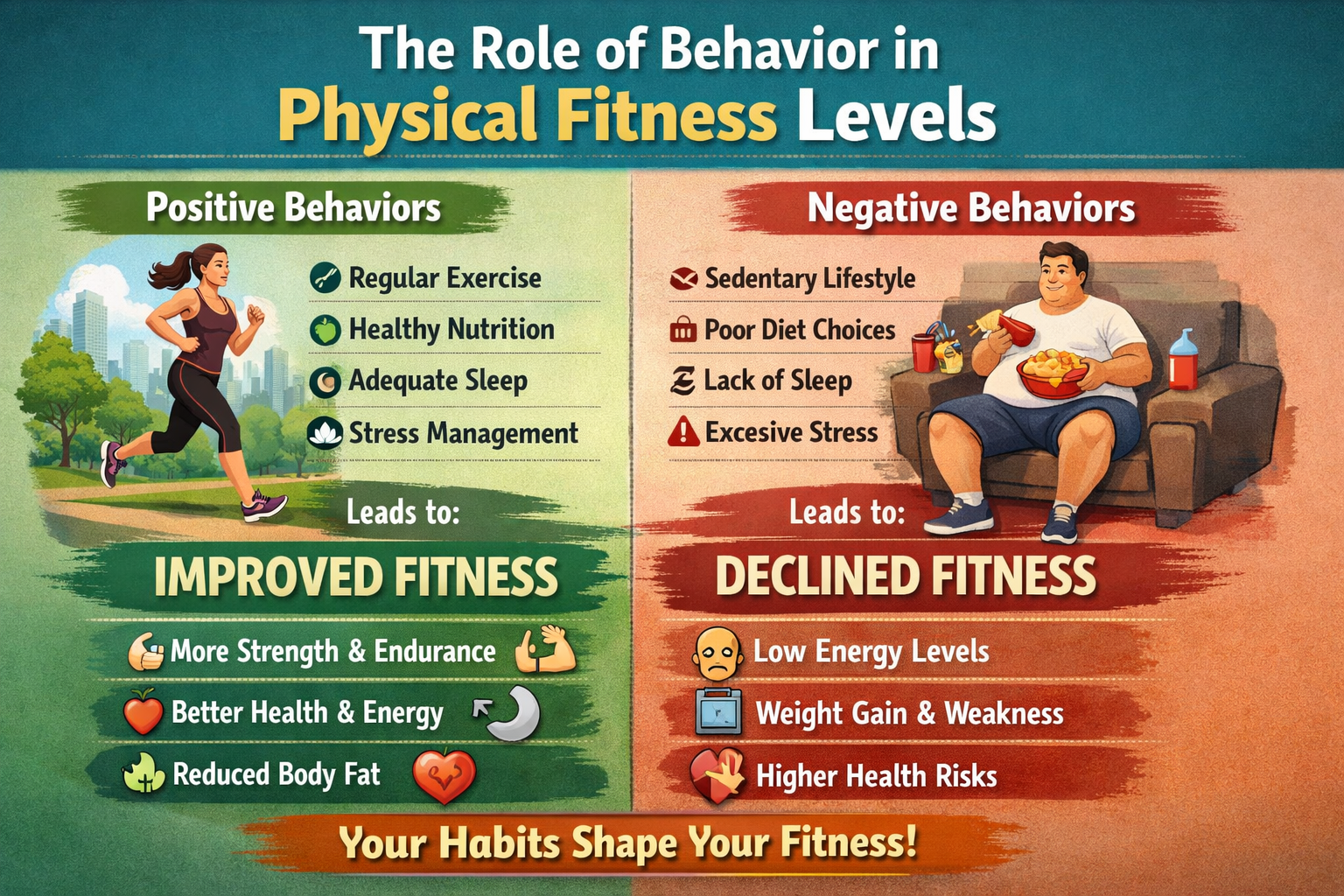
Behavior serves as the foundation upon which physical fitness is built discuss the role of behavior in physical fitness levels. It determines whether individuals engage in physical activity regularly, adhere to healthy nutrition practices, get sufficient rest, and avoid harmful habits. Unlike genetic factors, behavior is modifiable, making it a powerful tool for improving fitness levels.
Behavioral patterns develop over time and are shaped by upbringing, education, culture, and personal experiences. Once established, these patterns can either support or undermine physical fitness.
Physical Activity Behavior and Fitness Levels
Exercise Consistency
One of the most direct ways behavior affects physical fitness levels is through consistency in physical activity discuss the role of behavior in physical fitness levels. Individuals who develop regular exercise habits tend to experience improvements in strength, endurance, flexibility, and overall health.
Consistency is more important than intensity. Moderate activities performed regularly often yield better long-term results than intense workouts performed sporadically. Behavioral commitment to routine movement—such as walking, cycling, or strength training—plays a decisive role in fitness outcomes.
Sedentary Behavior
Sedentary behavior has become increasingly common due to modern lifestyles discuss the role of behavior in physical fitness levels. Prolonged sitting, excessive screen time, and limited physical movement negatively affect physical fitness levels. Even individuals who exercise occasionally may experience reduced fitness if they remain sedentary for most of the day.
Behavioral choices such as taking breaks from sitting, using stairs instead of elevators, or incorporating movement into daily routines can significantly counteract the negative effects of inactivity.
Nutrition Behavior and Physical Fitness
Eating Habits
Nutrition behavior is closely linked to physical fitness discuss the role of behavior in physical fitness levels. The quality, quantity, and timing of food intake influence energy levels, muscle development, recovery, and body composition. Regular consumption of nutrient-dense foods supports optimal physical performance, while poor eating habits hinder fitness progress.
Behavioral patterns such as emotional eating, irregular meals, or excessive consumption of processed foods can negatively impact physical fitness levels. On the other hand, mindful eating and balanced dietary choices enhance energy availability and physical resilience.
Hydration Behavior
Hydration is often overlooked but plays a crucial role in physical fitness. Behavioral habits related to water intake affect endurance, strength, and recovery. Individuals who neglect hydration may experience fatigue, muscle cramps, and reduced performance.
Developing the habit of regular fluid intake, especially during physical activity, supports optimal bodily function and sustained fitness.
Sleep Behavior and Recovery
Sleep behavior significantly influences physical fitness levels. Adequate sleep allows the body to recover, repair muscles, regulate hormones, and restore energy discuss the role of behavior in physical fitness levels. Poor sleep habits can impair coordination, reduce strength, and increase injury risk.
Behavioral factors such as irregular sleep schedules, excessive screen exposure before bedtime, and high caffeine consumption can disrupt sleep quality. Consistent sleep routines and healthy nighttime behaviors contribute to improved physical performance and long-term fitness.
Psychological Behavior and Motivation
Attitude Toward Physical Activity
An individual’s attitude toward exercise strongly influences their fitness behavior. Those who view physical activity as enjoyable or rewarding are more likely to engage consistently. Conversely, negative attitudes can create resistance and avoidance.
Positive reinforcement, goal-setting, and self-belief play key roles in shaping attitudes that support higher physical fitness levels discuss the role of behavior in physical fitness levels.
Motivation and Self-Discipline
Motivation drives initial participation in physical activity, while self-discipline sustains it discuss the role of behavior in physical fitness levels. Behavioral self-regulation—such as planning workouts, tracking progress, and maintaining accountability—helps individuals stay committed even when motivation fluctuates.
Intrinsic motivation, driven by personal satisfaction and enjoyment, tends to produce more sustainable fitness behaviors than external pressure alone.
Stress Management Behavior
Stress affects physical fitness both directly and indirectly discuss the role of behavior in physical fitness levels. Chronic stress can lead to fatigue, muscle tension, hormonal imbalances, and reduced immune function. It can also influence behaviors such as overeating, inactivity, or poor sleep.
Healthy stress management behaviors—including relaxation techniques, physical activity, and time management—support physical fitness by improving recovery and emotional balance.
Social Behavior and Physical Fitness
Social Support
Social behavior plays a significant role in shaping fitness habits discuss the role of behavior in physical fitness levels. Support from family, friends, or fitness communities can encourage consistency, accountability, and motivation. Group activities often make exercise more enjoyable and sustainable.
Individuals with strong social support networks are more likely to maintain healthy behaviors that enhance physical fitness levels.
Cultural Influences
Cultural norms and values influence attitudes toward physical activit discuss the role of behavior in physical fitness levelsy, body image, and health behaviors. In some cultures, active lifestyles are encouraged from an early age, while in others, physical activity may be less prioritized.
Understanding cultural behavioral patterns is essential for promoting inclusive and effective fitness initiatives.
Environmental Behavior and Lifestyle Choices
Behavior is also shaped by the environment in which individuals live discuss the role of behavior in physical fitness levels. Access to safe spaces for exercise, availability of healthy food options, and workplace culture influence daily choices.
Behavioral adaptation—such as choosing active transportation or creating home exercise routines—can overcome environmental limitations and support physical fitness.
Behavioral Barriers to Physical Fitness
Despite awareness of the benefits of exercise, many individuals struggle to maintain fitness due to behavioral barriers such as:
- Lack of time management
- Low self-confidence
- Fear of failure or injury
- Habitual inactivity
- Overreliance on convenience
Identifying and addressing these behavioral obstacles is critical for improving physical fitness levels across populations.
Behavior Change and Fitness Improvement
Habit Formation
Physical fitness is best achieved through sustainable habits rather than temporary efforts. Behavioral science shows that small, consistent actions lead to lasting change discuss the role of behavior in physical fitness levels. Establishing routines, setting realistic goals, and tracking progress help reinforce positive behaviors.
Behavior Modification Strategies
Effective strategies for improving fitness-related behavior include:
- Goal setting
- Self-monitoring
- Positive reinforcement
- Environmental cues
- Social accountability
These approaches help individuals gradually replace unhealthy behaviors with supportive ones.
The Role of Education in Shaping Fitness Behavior
Education plays a vital role in shaping behavior related to physical fitness. Knowledge about the benefits of exercise, proper nutrition, and recovery empowers individuals to make informed decisions.
Behavior-focused education programs encourage long-term lifestyle changes rather than short-term compliance.
Behavior Across Different Life Stages
Children and Adolescents
Early behavioral patterns significantly influence lifelong physical fitness. Encouraging active play, limiting sedentary behavior, and fostering positive attitudes toward movement are essential during childhood.
Adults
In adulthood, work responsibilities and family obligations often affect fitness behavior. Time management, stress control, and intentional activity planning become critical.
Older Adults
For older adults, behavior influences mobility, independence, and quality of life. Regular physical activity, balanced nutrition, and healthy routines support functional fitness and reduce age-related decline.
Long-Term Impact of Behavior on Physical Fitness Levels
The long-term effects of behavior on physical fitness are cumulative. Small daily choices compound over years, leading to either improved vitality or gradual decline. Consistent healthy behavior enhances endurance, strength, mental well-being, and disease resistance.
Behavioral commitment to an active lifestyle is one of the most reliable predictors of sustained physical fitness.
Conclusion
The role of behavior in physical fitness levels cannot be overstated. While biological and environmental factors influence health, behavior ultimately determines how these factors interact. Physical fitness is not achieved through occasional effort but through consistent, intentional actions rooted in daily habits.
Positive behaviors related to physical activity, nutrition, sleep, stress management, and social interaction collectively shape fitness outcomes. By understanding and modifying behavior, individuals can take control of their physical fitness levels and improve their overall quality of life.
Promoting healthy behavior is not only a personal responsibility but also a societal opportunity. When supportive environments, education, and social structures encourage positive behavior, higher physical fitness levels become achievable for individuals and communities alike.
READ MORE: THEBOSSMAGAZINE
